Buy & Sell Used Machinery with CNC Controls
CNC
Used CNC Machines for Sale Cheap
Here you can find high quality Second Hand Computer numerical control (CNC) machinery.
Computer numerical control (CNC) is the automation of machine tools by means of computers executing pre-programmed sequences of machine control commands.This is in contrast to machines that are manually controlled by hand wheels or levers, or mechanically automated by cams alone.
In modern CNC systems, the design of a mechanical part and its manufacturing program is highly automated. The part's mechanical dimensions are defined using computer-aided design (CAD) software, and then translated into manufacturing directives by computer-aided manufacturing (CAM) software. The resulting directives are transformed (by "post processor" software) into the specific commands necessary for a particular machine to produce the component, and then loaded into the CNC machine.
Since any particular component might require the use of a number of different tools – drills, saws, etc. – modern machines often combine multiple tools into a single "cell". In other installations, a number of different machines are used with an external controller and human or robotic operators that move the component from machine to machine. In either case, the series of steps needed to produce any part is highly automated and produces a part that closely matches the original CAD.
Contact Asset-Trade today to find your used Computer numerical control (CNC) Machine to enhance your production.
No used machines currently found
We are sorry, but we currently do not carry used machines from Buy & Sell Used Machinery with CNC Controls.
Please use our search box to find similar products
No used How can we help you? machines currently listed
We are sorry, but currently we do not carry any used machines fromHow can we help you? .
Please use our search box to find similar products, or contact us to find your second hand
Alternatively, you can click on our logo to start from the home page.
Definition & Advantages buying Used CNC machines
Computer numerical control (CNC) machines are automated and run and often programmable and reprogrammable, machining devices that use computers to guide various processes. These computer-guided machines typically consist of a milling head or cutting tool, an electromechanical device for moving the machine's workpiece relative to its tools along three axes, and a device for holding the material being worked on. The controlled motion of these mechanical parts is commonly referred to as the manufacturing process.
CNC machines were introduced in the 1950s when they were applied to automated missile production. During the 1980s, heavy industrial manufacturers like Fanuc, Mazak, Mitsubishi Electric, and Yaskawa were more widely adopted in Japan.
A CNC machine is like a computer-controlled tool that can control itself with precision. It does this using modern technology, usually through software and mechanics; there are many different types, but these three main components always need human input for final adjustments before they're fully operational.
Stepping motors are generally used to move CNC machines, but servo-motors can be more powerful and efficient for demanding applications. More recently, new technologies have become available that offer fantastic advancements in performance: linear electric motors provide an instant torque response with ultra-low noise levels, which enables them to substitute stepper drives without any loss or degradation due to their smooth operation at high speeds up close tolerances on small features giving greater productivity while saving time
The best-known applications including milling, dosing and engraving, depending on requirements like material processed such as aluminium brass plastic bronze steel. CNC systems can be used for any production in an industrial setting with its modern capability to handle Grinding parting shots or multiple welding parts together at one time without having to stop operation due to assembling more oversized items like car bodies by laser cutting them into shape before assembly occurs
A good CNC machine offers high quality and efficiency. What makes it stand out compared to other types of devices? A key factor is its reliability, which ensures that the system operates without being interrupted for long periods in case something goes wrong or if a technician needs access during regular business hours since they do not have onsite service technicians available 24/7 like some companies might offer with their ERP software solution from [Incorporated Name]. This means you don't want your expensive cutting tools put at risk by having them sit around waiting patiently until called into use when someone can come to fix an issue where there may be problems even though this would typically only happen after-hours, so nobody's left
NC machines were created from punch-card technology. The first one was developed by John Parsons in Massachusetts, USA, during 1949-1952 when he laid down a pioneering foundation at MIT that led to modern CNC control systems with over 300 electron tubes on his work.
NC machines have been around for over 50 years, and the first NC machine was introduced in Europe. The tool change automation was widespread in 1965 when it captured all of their attention that had not yet turned elsewhere.
In 1968 CNC programs were being created on handwritten programming languages before 1978 saw programmers transition into using computer-aided design/computer-generated imagery(CAD). The 1980s saw fewer changes because no specialized software development teams existed until the late 1990s.
The most essential "machine accessory" for a CNC machine today and in the future is good maintenance. However, there are many other options that you can add to your system, such as loading systems or unloading robots, among others, depending on what your project/operation requires functionality.
How many axes are there on a CNC machine?
A general statement is complex since the number of axes or even modules depends on what you need. There's a distinction between feed and machining axles (or heads). For example, with industrial milling processes, 5-6 CNC systems can be used at once; one machine has 21 gears.
What types of controls are available?
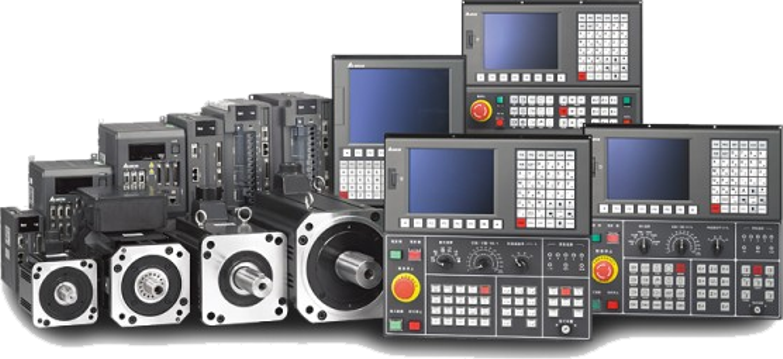
A computer controls CNC machines, and they can be set up to have either local or remote priority. This means that you will need two types of input: one for your program, which tells the machine what it needs to do; another from sensors attached on both sides that provide feedback about where things stand right now regarding meeting those demands. There's plenty more information available if anyone is interested. Take a look at our machines with CNC controls with Siemes, Heidenhain or Fancu.
What is point control?
In the case of point control or even point-to-point control, it is necessary to know precisely where your movement will end up before starting. Suppose you're working with a CNC machine tool and approach one end from below instead of above. In that case, this type can be used effectively because there's no need for modification during operation since that would cause Drift Error (when trying something new). However, most movements these days use absolute positioning instead, which makes them more versatile but also requires additional equipment such as sensors on robots/armies so everything doesn't slip away while being worked upon
What is linear control?
A type of control system in which the speed and position can be changed with a single axis is linear. This form, known as extended point control for its ability to adjust both values simultaneously rather than one at a time like most other types, does not see much use outside industrial production because it's more rigid when compared with path- or arcuate based systems where you have complete freedom over movement direction depending on what task needs doing - even if they don't attempt any particular trajectory.
What do CNC machines cost?
The cost of CNC machines varies depending on the application. For example, if you want to make complex metal parts or 3D printed items, then it would be around 5k-150k euros
Are there CNC systems with cameras?
Some industrial applications require a vision system to monitor process machining with the result that some CNC machines are equipped with cameras during manufacture.
Conclusion
So what does this all mean? It means that a CNC machine is like a computer-controlled tool that can control itself with precision. It does this using modern technology, usually through software and mechanics; there are many different types, but these three main components always need human input for final adjustments before they're fully operational. Contact our team today if you want more information on any type of CNC machine or would like us to check out your current one.